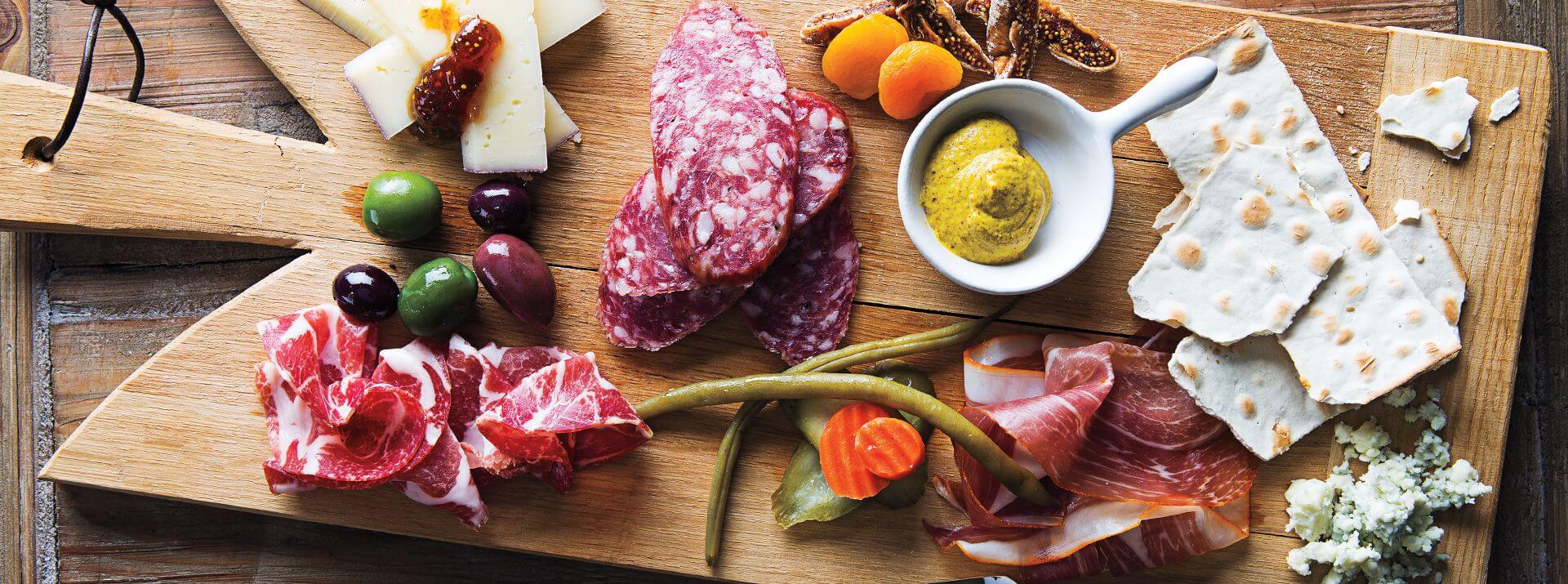
A charcuterie board doesn’t follow a recipe but is instead a lesson in composition. Put together the perfect charcuterie plate with diverse textures and flavors using this easy cheat sheet.
Wine & Cheese
Wine and cheese are delicious on their own, but when paired together, they make an irresistible combination – that is, if you know how to match them well to complement all flavors.
Good news – we’ve done the pairing for you! Shop the following wine and cheese pairings in our stores.
- Cordero con Piel de Lobo Malbec Reserva + Ponce de Leon Manchego
- Sun Goddess Pinot Grigio + Reggiano Parmesan
- Tenuta Santo Pietro Viper Super Tuscan + Imported Pecorino Romano
- Groth Sauvignon Blanc + La Bonne Vie Fig and Olive Goat Cheese
- J. McClelland Cellars “The Historian” Red Blend + Saint Agur Blue Cheese
Reds: Red wines like Cabernet Sauvignon or malbec may overpower delicate cheeses, so try pairing your favorite reds with more pungent-flavored cheeses like blue cheese, aged Cheddar or Gorgonzola.
Whites: Since white wines are lower in tannins than their red relatives, they’re easier to pair. You can’t go wrong with Riesling and Asiago, Sauvignon Blanc and Gouda, or Pinot Grigio and Parmesan.
Rosé: Exhibiting qualities of both red and white wines, rosé makes the perfect pairing to a variety of cheeses. Try fresh cheeses like burrata or mozzarella or semi-soft cheeses like goat cheese, Gruyère, Fontina or feta.
Once you have your wine and cheese pairings settled, jump into building the rest of your board!

Meats:
Whole muscle cuts of meat are shaved into slices, usually paper-thin. Common examples are prosciutto, lomo de cerdo (a cured pork tenderloin often just referred to as “lomo”), and bresaola (beef tenderloin that’s been air-dried and salted). When using dry-cured meat such as salami or mortadella on a charcuterie board, mix it up with complementary and contrasting flavors. For example, chorizo with a strong garlic flavor or a spicy soppressata should be balanced by something with a sweeter flavor profile, like mild and buttery saucisson sac.
Pickled Vegetables:
Pickled vegetables complement the rich and salty flavors of meats and cheeses. Pickled items like red peppers, carrots, olives and red onions are palate cleansers between bites.
Cheese:
When pairing cheese with charcuterie, it’s all about opposites. One element needs to contribute a sensation of tart, citrusy, mouthwatering brightness to cut the fat and protein of the other. Charcuterie board staple cheeses are soft creamy blue or Brie, a pungent wash-rind variety, a hard-aged salty cheese, tangy goat cheese and something sharp.
Something Sweet:
Add a sweet component like an infused honey or jam to counterbalance the salty and fatty cheeses and meats. Dried fruits like apricots, cranberries or figs are also a nice complement to charcuterie boards.
Mustards:
Mustards, made with a variety of sweet and savory herbs and spices, add complex flavor to boards. The tangy and spicy flavors also balance the richness of the cheeses and meats.
Bread:
As a textural contrast, serve plain crackers, breadsticks or crostini, or crusty bread. Mellow-tasting items allow the flavor profile of the cheese and charcuterie to shine.